
Mobile, Manufactured, or Modular? Understanding the Difference Before You Buy or Sell
By Daniel Peterson
When people talk about factory-built homes, the terms mobile home, manufactured home, and modular home often get used as if they mean the same thing.
They do not.
In real estate, those words matter. The correct classification can affect financing, insurance, appraisal, resale value, and how a buyer, lender, inspector, or appraiser evaluates the property. Whether you are buying, selling, or simply trying to understand what you own, knowing the difference can save you time, money, and confusion.
At McMinn Realty, we help buyers and sellers across North Central Mississippi make informed real estate decisions. Factory-built housing can be a good option in the right situation, but the details matter.
The Biggest Difference: Date, Building Code, and Construction
The main difference between mobile, manufactured, and modular homes comes down to three things:
-
When the home was built
-
Which building code it follows
-
How it is constructed and placed on the property
A simple way to think about it is this:
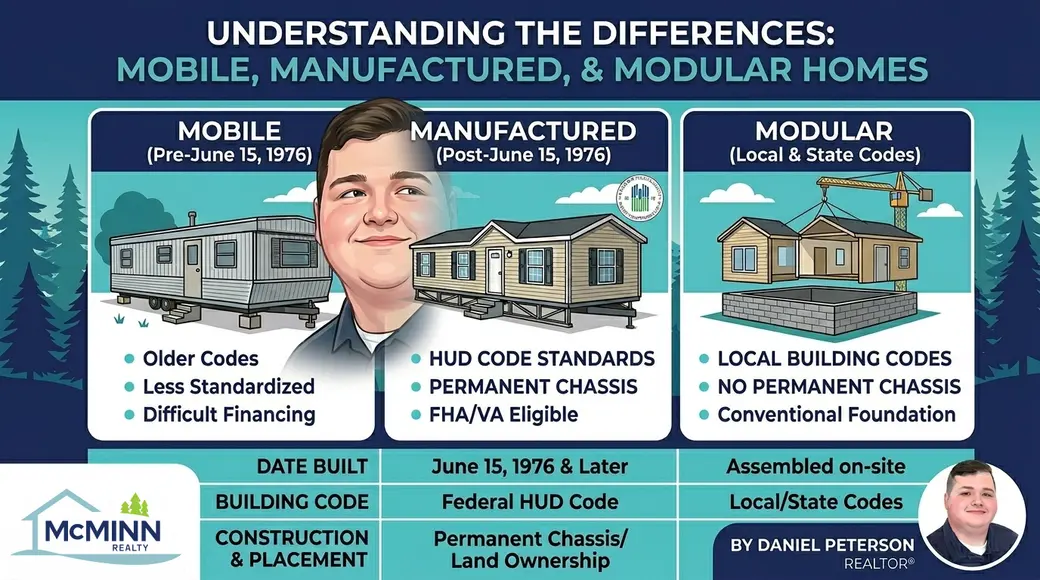
A mobile home was built before June 15, 1976.
A manufactured home was built after June 15, 1976 and follows federal HUD standards.
A modular home is factory-built in sections but must meet the same local and state building codes as a traditional site-built home.
That may sound technical, but these distinctions can make a real difference once a property enters the market.
What Is a Mobile Home?
A mobile home is a factory-built home constructed before June 15, 1976. That date matters because it came before the federal HUD Code went into effect.
Because older mobile homes were built before today’s manufactured housing standards, they can sometimes be more difficult to finance or insure. Many older units may not meet modern construction expectations, and buyers may have fewer loan options available.
That does not mean a mobile home has no value. Location, land ownership, utility access, condition, maintenance history, and local demand all still matter. But from a real estate perspective, older mobile homes usually face the greatest challenges with financing and resale.
For sellers, it is especially important not to overstate what the home is. Calling an older mobile home a manufactured home or modular home can create problems once the lender, appraiser, or insurance provider gets involved.
What Is a Manufactured Home?
A manufactured home is also factory-built, but it was constructed after June 15, 1976 under federal manufactured housing standards.
Manufactured homes are built under the federal HUD Code and are transported on a permanent steel chassis. They may be placed on temporary or permanent foundations, depending on the home, land, and installation.
HUD provides helpful information for homeowners through its Manufactured Housing Homeowner Resources page. HUD’s Office of Manufactured Housing Programs oversees federal manufactured housing construction and safety standards.
In many cases, manufactured homes can be financed through FHA, VA, USDA/RHS, or conventional loan programs when the home, foundation, land, and borrower meet the applicable requirements. Buyers using military benefits may also want to review general information from VA Home Loans early in the process.
A well-maintained manufactured home that is properly affixed to the land can be very marketable, especially for buyers looking for affordability, privacy, acreage, or rural property options.
If you are searching for property in the area, you can start with homes for sale in North Central Mississippi or land for sale in North Central Mississippi.
What Is a Modular Home?
A modular home is built in sections at a factory and then assembled on-site. The key difference is that modular homes are built to the same local and state building codes as traditional site-built houses.
Unlike manufactured homes, modular homes are not defined by a permanent steel chassis. Once assembled on a conventional foundation, they are generally treated much more like traditional homes.
In many markets, modular homes are financed, appraised, and valued similarly to site-built houses. They may also appreciate in a similar way, depending on the quality of construction, location, condition, and market demand.
For buyers, this can make modular homes easier to understand from a financing and appraisal standpoint. For sellers, it can help support stronger positioning in the marketplace when the home is properly documented.
Why the Difference Matters in Real Estate
The difference between mobile, manufactured, and modular homes is not just a wording issue. It can affect the entire transaction.
For buyers, the classification may affect:
-
Loan eligibility
-
Down payment requirements
-
Appraisal process
-
Insurance availability
-
Foundation documentation
-
Resale expectations
For sellers, the classification may affect:
-
How the property is marketed
-
Which buyers can purchase it
-
Whether financing delays occur
-
How the appraiser evaluates the property
-
What documents may be needed before closing
For agents, accuracy matters because these terms can shape the entire path of a sale. A property that is described incorrectly may attract the wrong buyers or create problems late in the transaction.
That is why it helps to work with local professionals who understand the difference between the structure, the land, the foundation, and the financing path. You can meet our local team on the McMinn Realty agents page.
A Simple Rule of Thumb
Here is an easy way to remember the difference:
Built before June 15, 1976?
It is generally considered a mobile home.
Built after June 15, 1976 and still on a permanent steel chassis?
It is generally considered a manufactured home.
Built in sections, assembled on-site, and placed on a conventional foundation without a permanent chassis?
It is generally considered a modular home.
Questions Buyers and Sellers Should Ask
If you are buying or selling one of these homes, here are a few practical questions to ask early:
-
What year was the home built?
-
Is there a HUD certification label or data plate?
-
Is the home permanently affixed to the land?
-
Is the land included in the sale?
-
What type of foundation does the home have?
-
Has the title been retired or converted to real property, if applicable?
-
What loan types are likely to be available?
-
How have similar properties sold in the local market?
These questions can help prevent surprises once the property is under contract.
For readers who want to dig deeper into the federal standards, the manufactured housing construction and safety standards are published in 24 CFR Part 3280.
Final Thoughts
Factory-built housing can offer real value, especially in rural markets and areas where buyers are looking for more space, affordability, or land ownership. But the details matter.
A mobile home, manufactured home, and modular home may look similar at first glance, but they are treated differently in real estate, lending, insurance, and appraisal conversations.
If you are looking at a mobile, manufactured, or modular home in Oxford, Water Valley, Lafayette County, Yalobusha County, or the surrounding North Central Mississippi area, it is worth slowing down and getting clear information before you move forward.
At McMinn Realty, we believe informed buyers and sellers make stronger decisions. If you have questions about buying or selling property in our area, contact McMinn Realty and we will be glad to help you sort through the details.
External Authority Links
Categories
- All Blogs (170)
- Abbeville (10)
- Agent News (27)
- Batesville (10)
- Bruce (10)
- Buying (85)
- Calhoun City (10)
- Calhoun County (10)
- Callie Canterbury (6)
- Closed-Sold (3)
- Coffeeville (10)
- Community (39)
- Daniel Peterson (6)
- Education (7)
- Glinda Daniels (5)
- Hope Weathersby (6)
- Lafayette County (22)
- Land (5)
- Lee McMinn, ALC (13)
- Market News (84)
- Oakland (10)
- Ole Miss (45)
- Oxford (51)
- Panola County (10)
- Pittsboro (10)
- Pontotoc (10)
- Pontotoc County (10)
- Randolph (10)
- Selling (74)
- Sharon Rice (7)
- Taylor (11)
- Thaxton (10)
- Tina Sikma (5)
- Tommy Lee Jones (5)
- Trenton Madson (6)
- Water Valley (48)
- Yalobusha County (20)
Recent Posts





GET MORE INFORMATION